- Token Terminal
- Posts
- Asset tokenization: a distribution multiplier
Asset tokenization: a distribution multiplier
+ data & product updates
Each week in The Snapshot, we share data-driven insights, highlight new listings, and showcase our latest product updates.
Read on for the latest edition 👇

We've entered a global race to tokenize money and capital markets
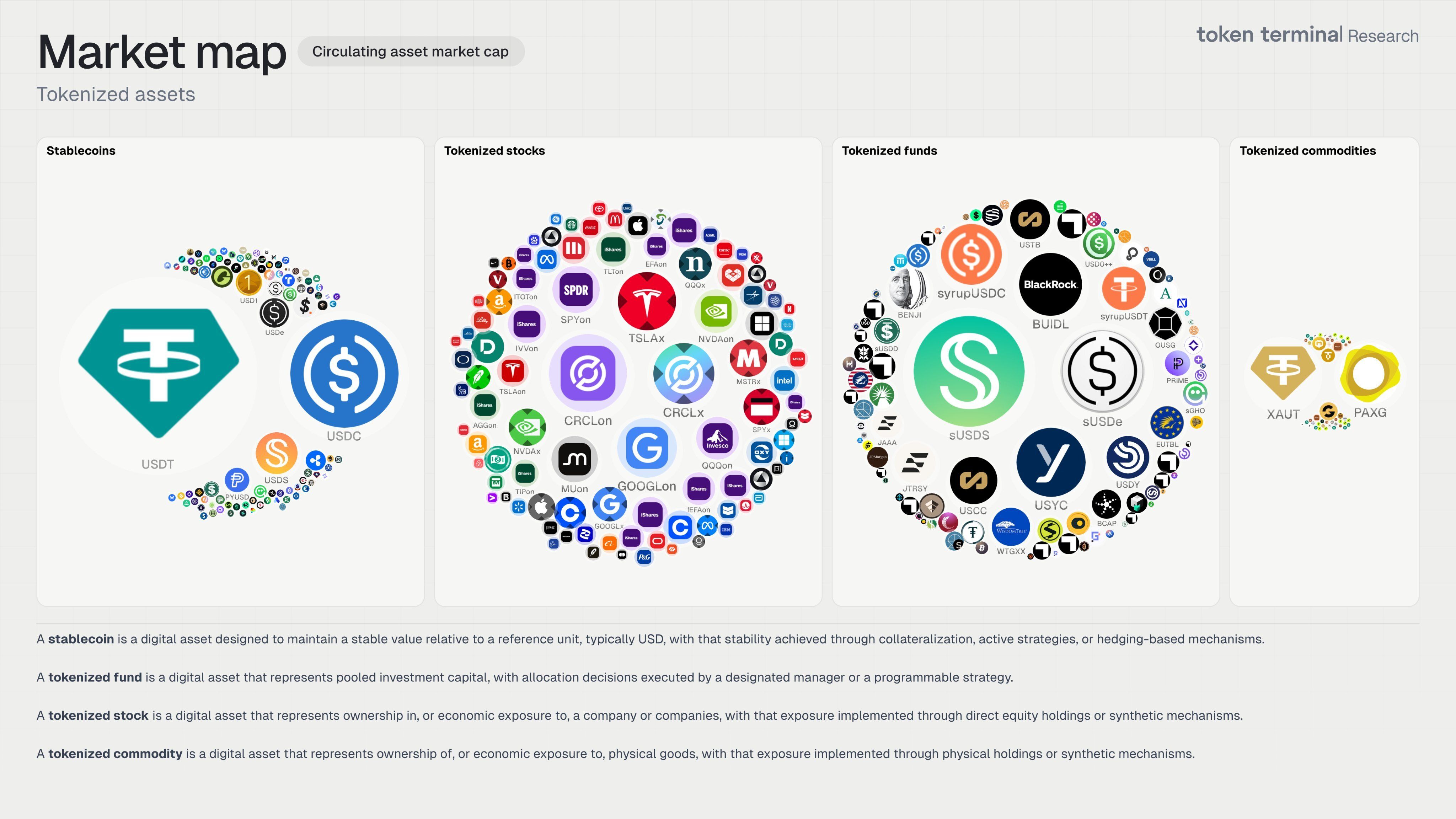
Taking the United States, whose currency and capital markets have been tokenized the most to date, as a concrete example: tokenization presents a structural opportunity to turn 5.6 billion internet users into potential buyers of U.S. dollars and debt (via stablecoins), as well as U.S. securities (via tokenized stocks). These new buyers will likely increase the total demand for U.S. financial assets, which in turn could result in lower (i) borrowing costs for the U.S. government, and (ii) cost of capital for U.S. corporations.
The economic implications are so meaningful that we expect all other major nations and economic zones to attempt to follow the U.S. playbook (see: GENIUS and CLARITY Act) for tokenizing both money and capital markets.
For an investor, this sets up a clear opportunity: the blockchains and issuers of tokenized assets that emerge as winners from this global race could very well grow into some of the world’s most valuable businesses over the coming decade - the time to pay attention is now.
Stablecoins
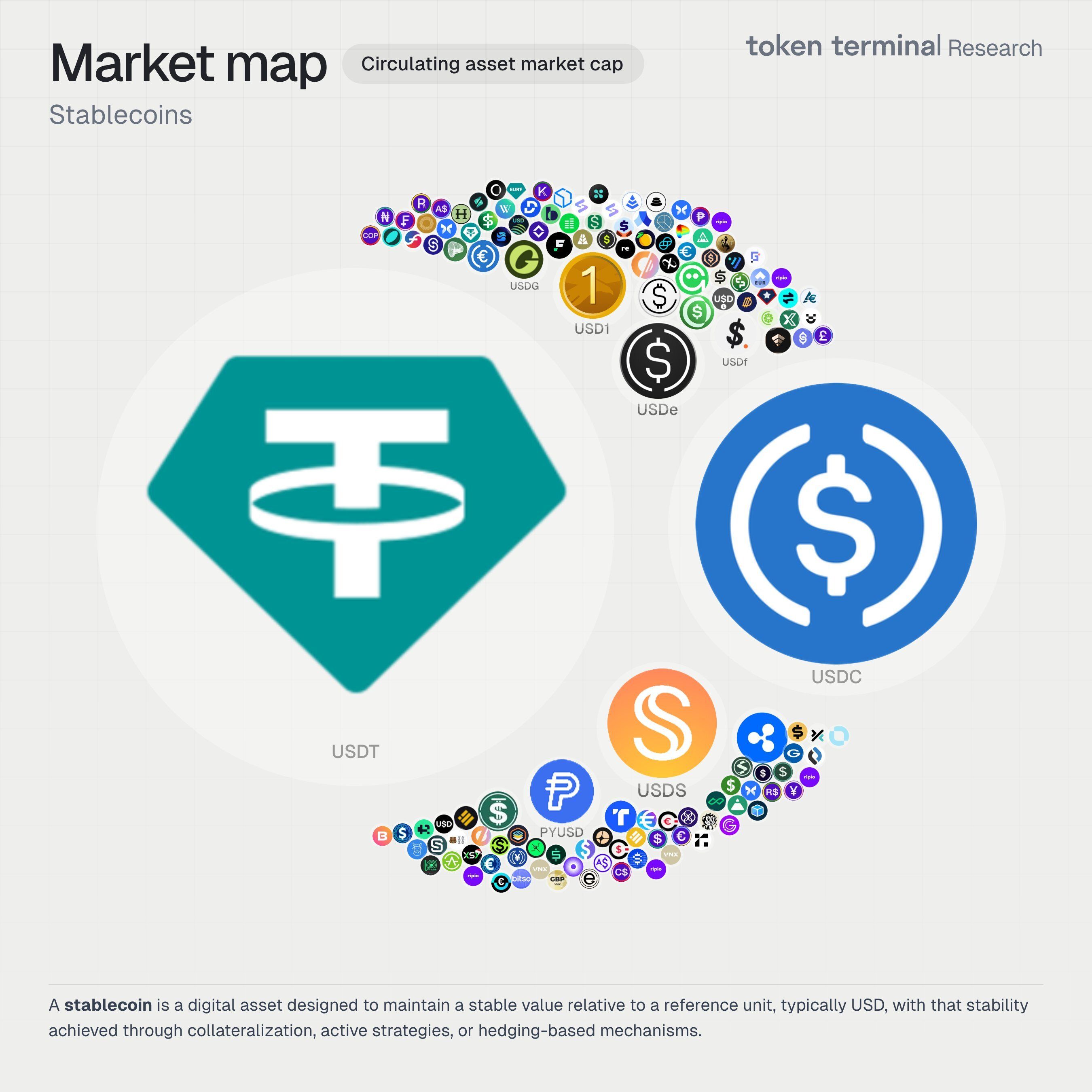
At a market cap of $300B+, stablecoins represent the largest category of tokenized assets. U.S. Treasury Secretary Scott Bessent has said that the U.S. dollar-backed stablecoin market has the potential to surpass $2 trillion in the next three years. The key question is: which chains and issuers will capture the most of that market opportunity?
Tokenized funds
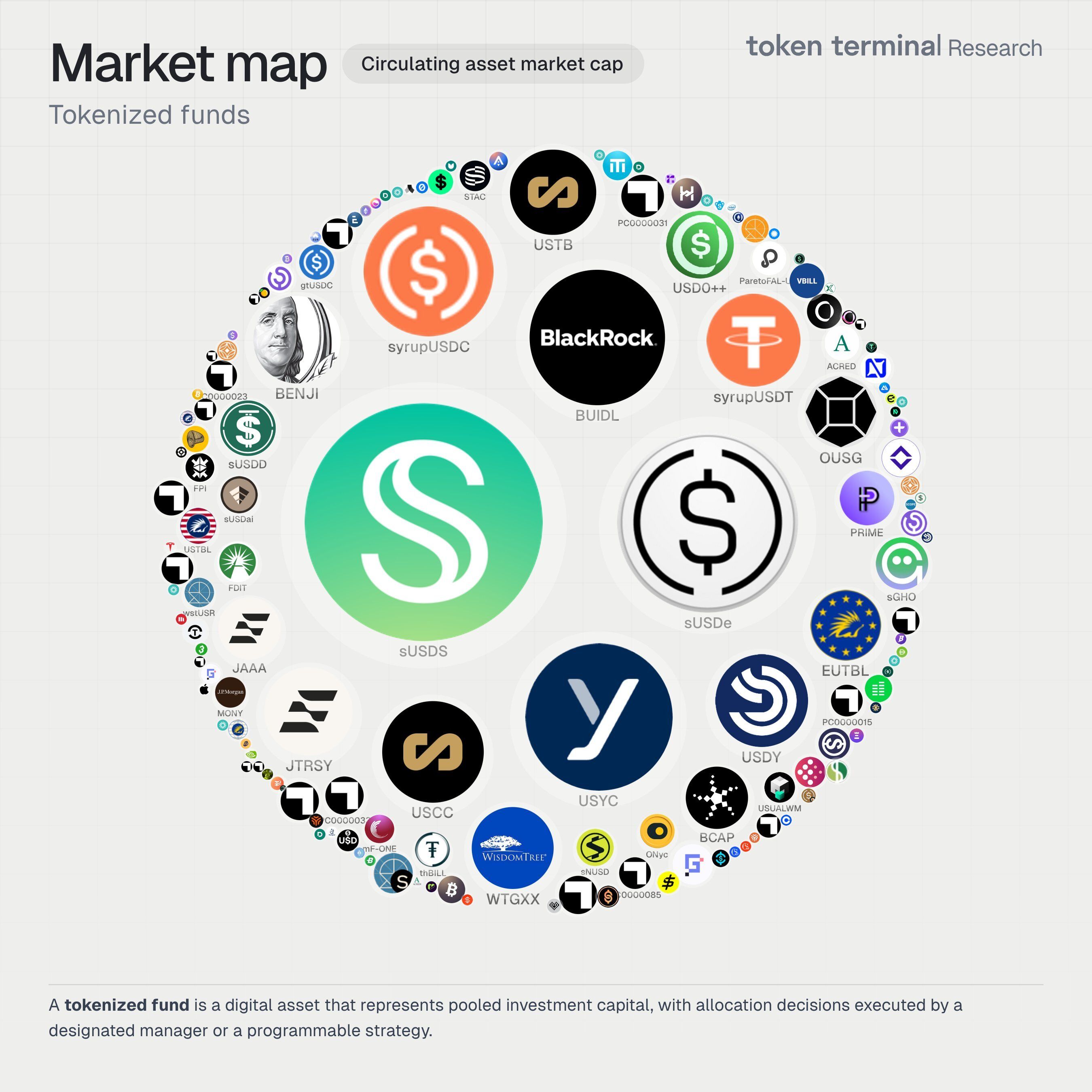
What's the primary difference between a stablecoin and a tokenized (money market) fund? The latter shares the economics with the user. Given the minimally low switching costs that are present when moving from one onchain asset to another, we'll see users gravitate from stablecoins to tokenized funds to earn yield. To remain competitive, stablecoin issuers will need to find ways to pass on yield to their users. It's feasible to expect these two categories to "merge" over time.
Tokenized stocks
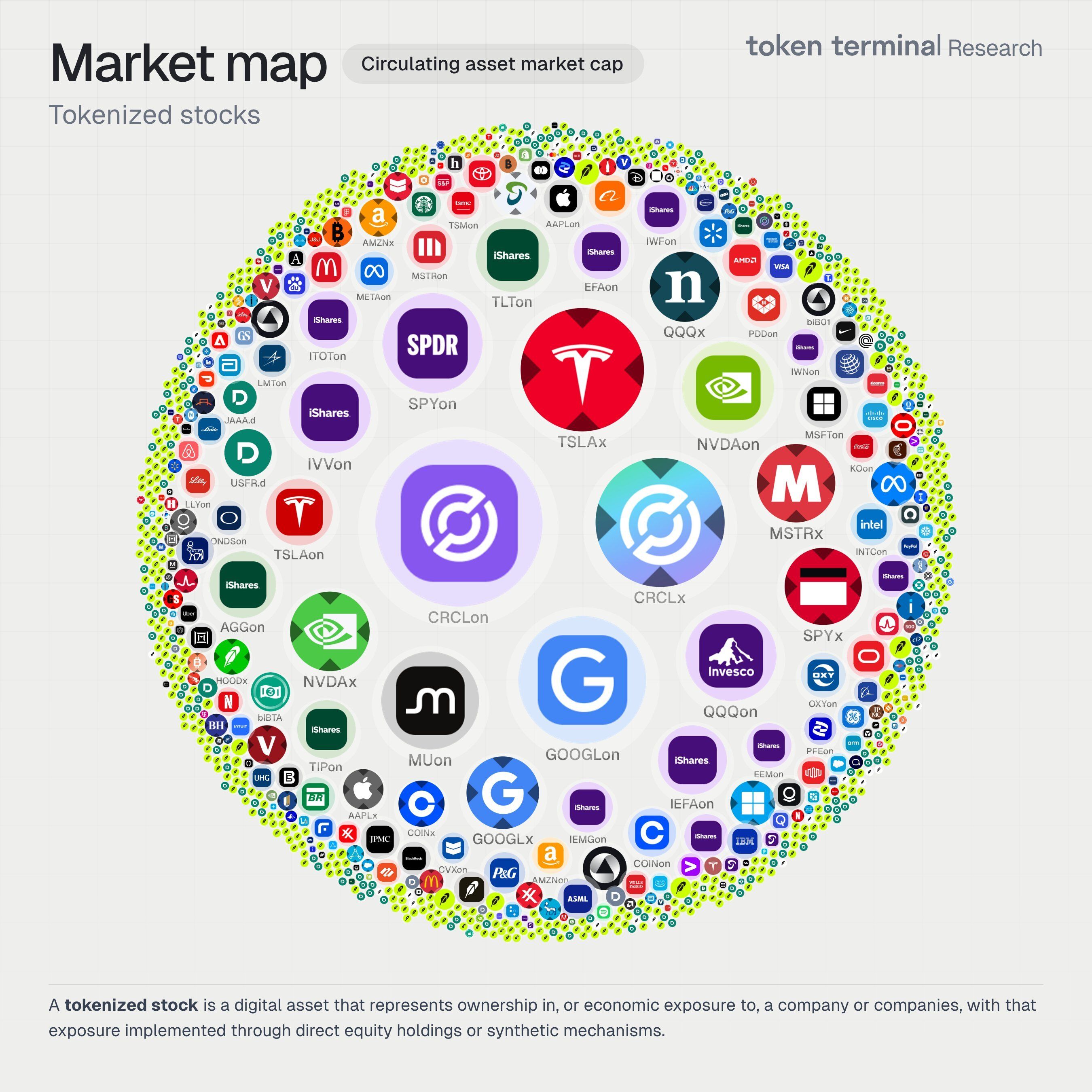
Tokenization unlocks global access to assets that already have demand. The USD dominates stablecoins because it’s the global reserve currency, i.e. the underlying asset is already one of the most in-demand assets globally. Similarly, the Mag7 dominates tokenized stocks or equities because they are the leading businesses globally, with the most in-demand stock.
Tokenized commodities
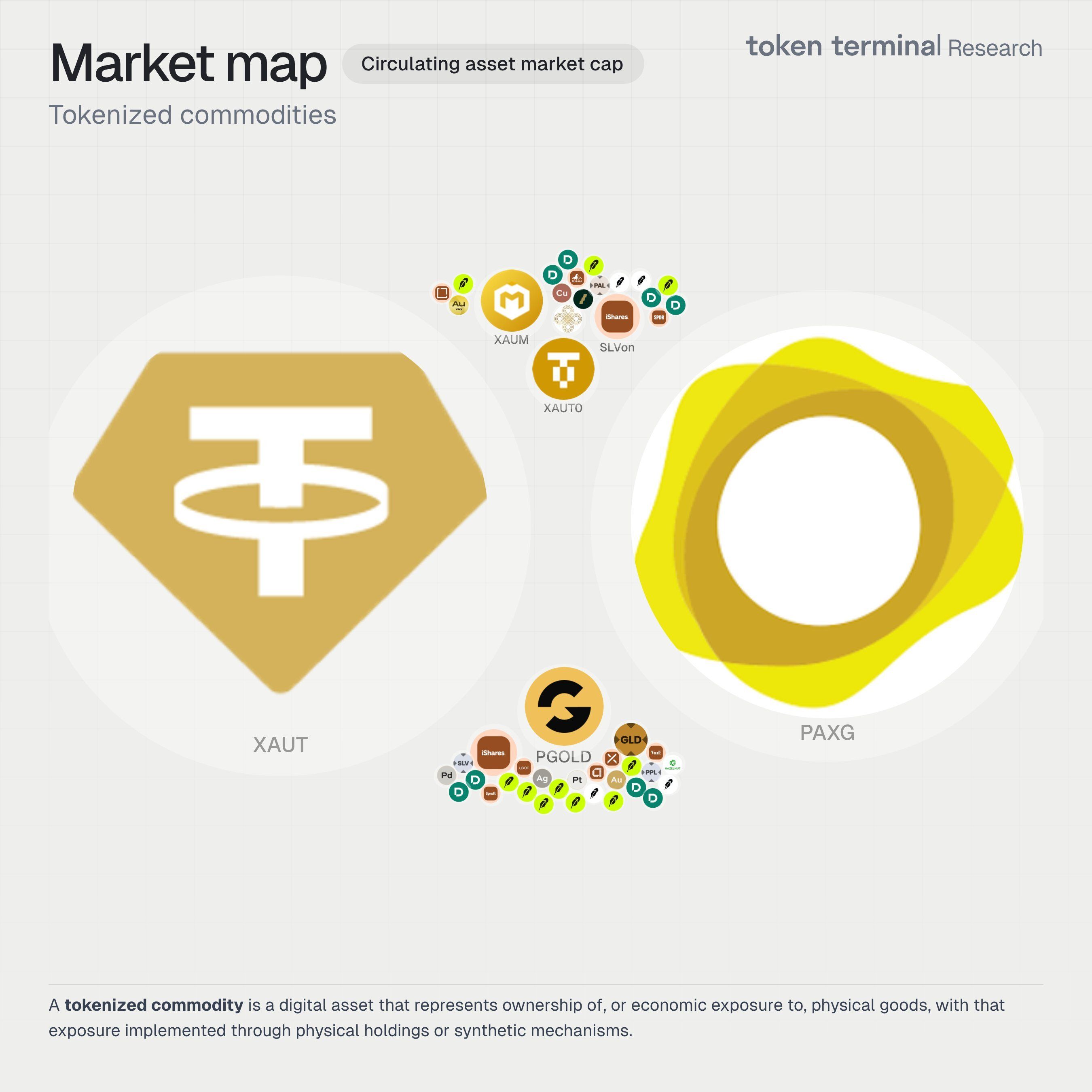
"A Swiss gold vault in your pocket." Gold has been a widely adopted store of value for centuries, i.e. it's already one of the most in-demand assets globally. Chains and issuers that bring gold (& other commodities) onchain have the opportunity to unlock another stablecoin-sized market.
Explore the full dataset here.

Since Token Terminal’s standardized metrics went live on Binance several months ago, the scope of our work has expanded from a data integration to in-depth quarterly (and monthly) reporting.
Token Terminal has published 17 Q4 2025 reports covering sectors including lending, liquid staking, derivatives, exchanges, infrastructure, and more. Each report covers key financial and operational metrics alongside qualitative commentary from the respective core team.
We’re proud to work with teams that prioritize transparency and clear stakeholder communication.
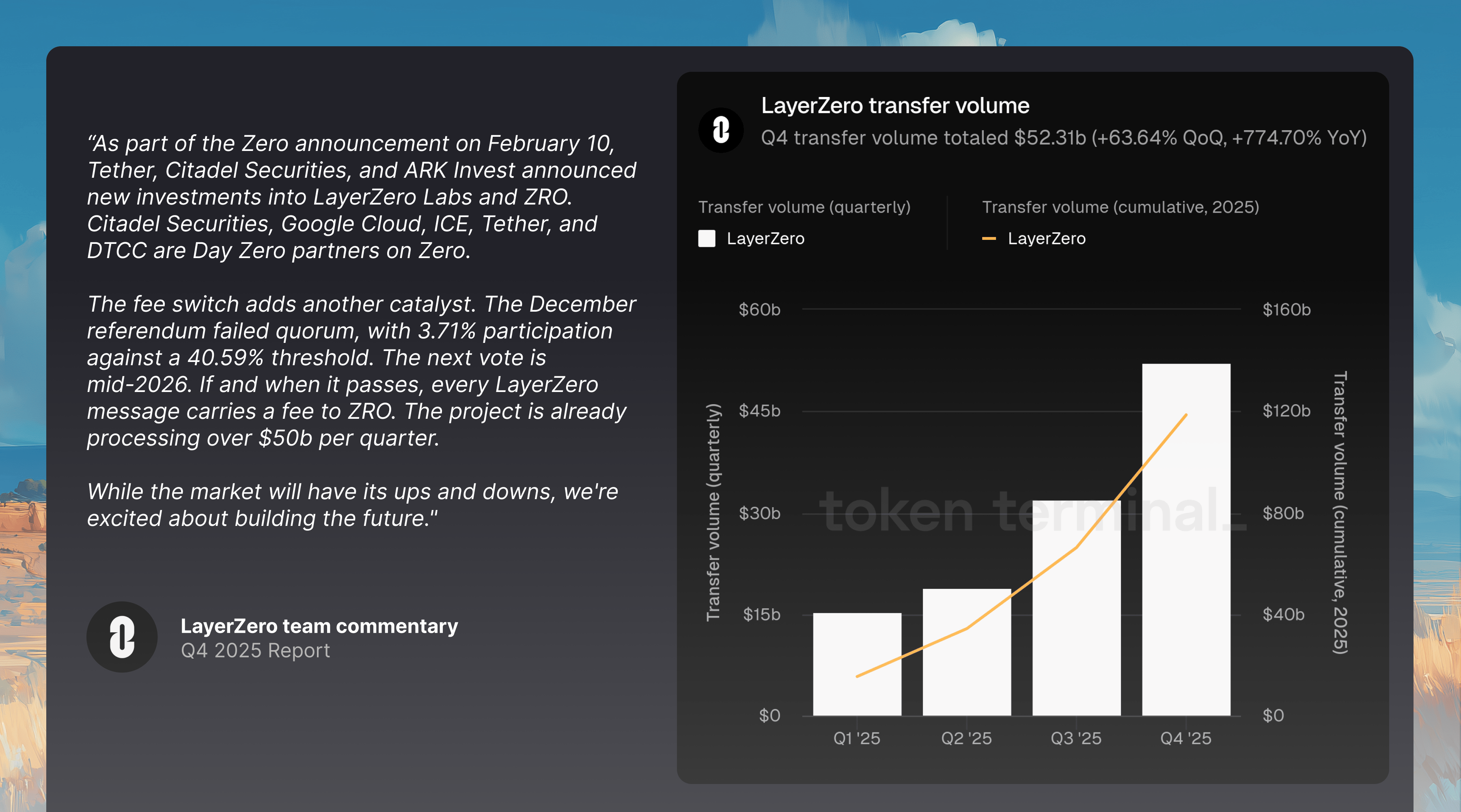
Featured report: LayerZero Q4 2025
More from Q4 2025:
"The launch of Aero, announced in November, represents the most significant structural evolution since Aerodrome's launch, unifying Aerodrome and Velodrome into a single cross-chain DEX with planned expansion to Ethereum mainnet and Circle's Arc beginning in Q2 2026.”
"Significant progress was made in Q4, adding core elements like an Android app, free physical cards, and multiple types of fiat transfers."
"Fluid launched on Plasma, grew across almost every metric, and secured more partnerships and integrations in Q4."
"MAU growth on Morpho has been rapid, driven by integrations with large-scale distribution applications such as Coinbase, World App, Bitget, and more."
"Boros recorded over $6b notional volume within five months of launch, though it still represents only ~0.1% of total crypto OI."
"Raydium's balance sheet remains healthy with substantial holdings in SOL and USDC relative to costs. This is reflected by Q4 profit margins of 91%, despite the decline in overall revenue."
"Q4 2025 marked a continuation of Sky's transition toward a yield-centric stablecoin ecosystem, with USDS increasingly serving as the system's primary growth engine.”
Reports for Q1 2026 are currently in production. If you're evaluating how to formalize your project's investor relations strategy, get in touch.

Platform updates:
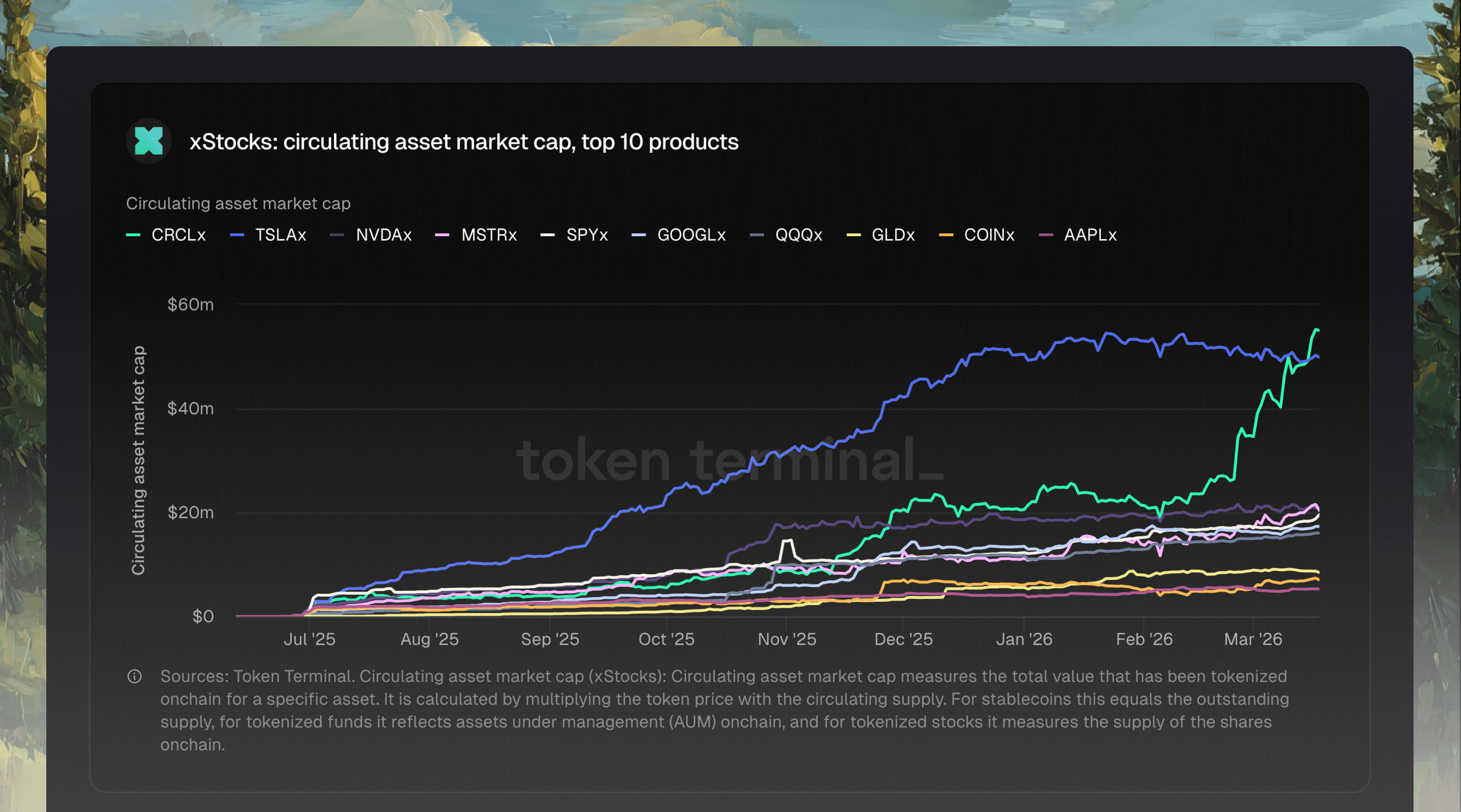
Listed xStocks as a project separate from Backed Finance. xStocks issues tokenized representations of U.S. stocks and ETFs. Token Terminal now tracks the project independently with 176 products and metrics including asset-first metrics like circulating market cap, transfer volume, transfer count, active senders, and more.
Listed Textile with basic metrics and added 11 tokenized fund assets it has issued across Celo, Base, and Ethereum. Textile is a decentralized private credit project that enables tokenized debt positions with continuous compounding.
Added support for Chainlink CCIP v1.6.0, updating transfer volume and active user metrics across all tracked chains. CCIP has processed $1.3b in transfer volume over the past 30 days.
Added revenue tracking for Near Intents and Uniswap on OP Mainnet.
Interested in getting listed? Read more here.

Programming the onchain gigafactory
Token Terminal's data pipeline processes raw data across 100+ blockchains, 1,200+ projects, and 3,000+ tokenized assets into standardized metrics. Every step in this pipeline requires specific domain knowledge. We now encode that knowledge into structured specifications called skills. A skill tells an agent how to execute one step of the manufacturing process: the context it needs, the tools it uses, and how to verify the result.
We have created nearly 100 skills across dozens of workflows, organized into a directed graph that covers the full pipeline from raw blockchain data to final standardized metrics. Every workflow gets a coverage grade, and success rates are tracked on every integration.
The result: integrating a new blockchain end-to-end can now be done in a single agent session, down from one to two weeks.
Interested in integrating with Token Terminal? Read more here.